Frequently asked questions
Who captured you?
A group of child soldiers from the terrorist group called Renamo captured us.
At the time the socialist aligned Frelimo were fighting a civil war with the western supported Renamo. In effect, this was a proxy war between the east and the west. The war endured from 1977 till 1992. Our rescue required a cease-fire to come into effect. This was the first between the warring parties and provided sufficient trust between the parties to allow peace talks to commence two weeks after our release.
Where were you captured?
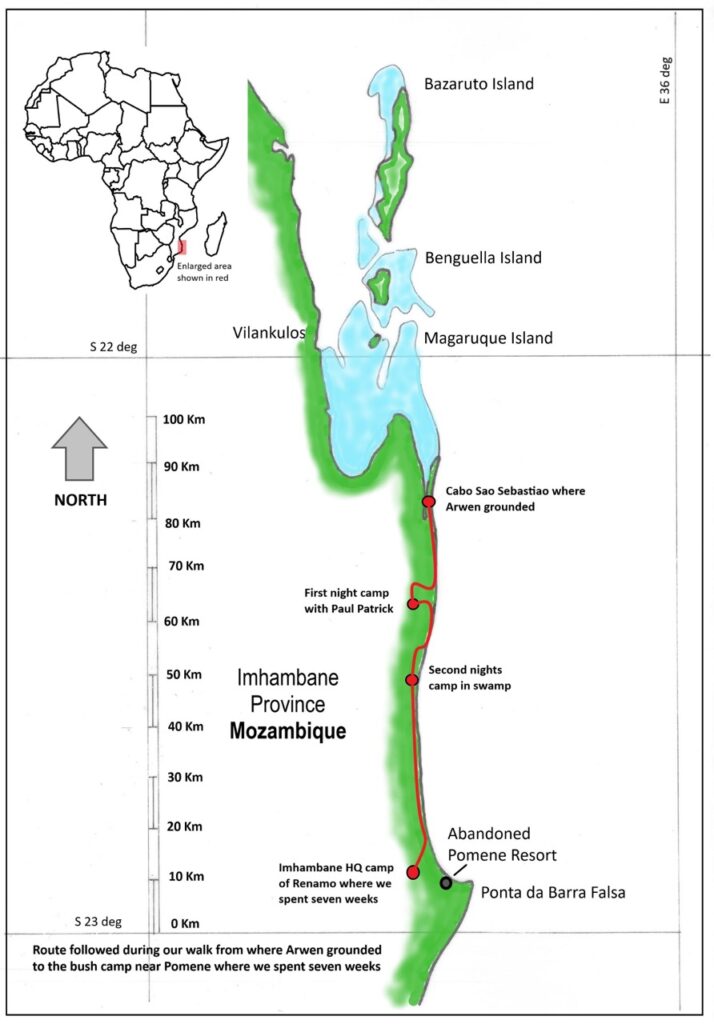
We were captured in central Mozambique, about 30km south of a group of islands called the Bazaruto Archipelago. We were then forced to walk south with our captors for about 70km to an area near Pomene.
Why were you there?
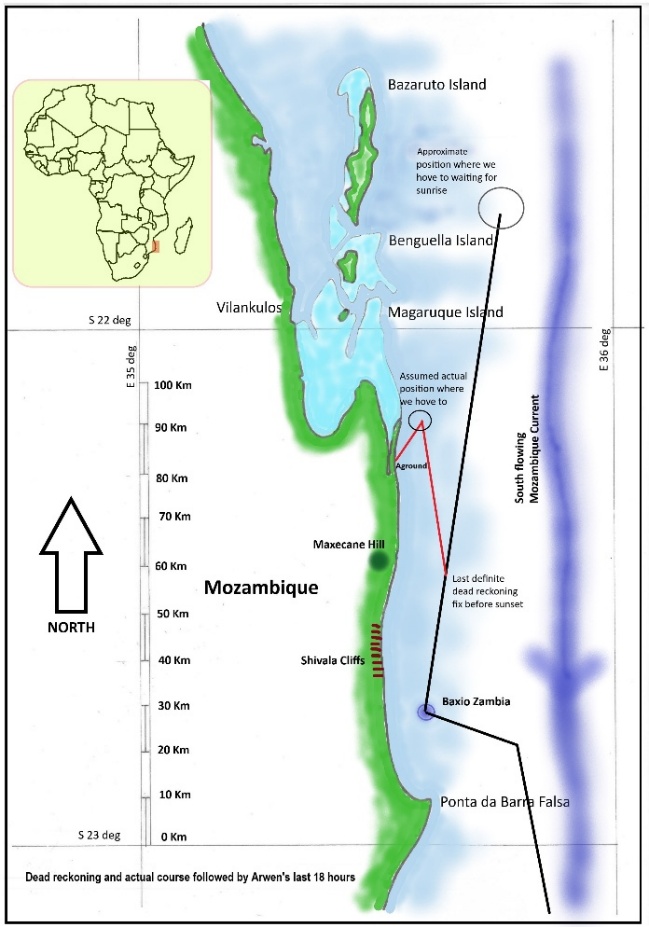
Other than, to gain sailing experience in preparation for a longer voyage, we were sailing to the Bazaruto Islands so that Sandy, my wife and a marine biologist, could investigate the possibility of undertaking future research work on molluscs near the islands. We ran aground in the middle of the night on a sand bar south of the islands and were waiting to refloat our yacht when we were captured by a group of boy soldiers from the Renamo terrorist group.
Was it not foolish to be sailing in an area where a civil war was being fought?
Information in South Africa was heavily controlled at that time. We were informed that the civil war was restricted to an area around the Renamo HQ in Gorongosa, 380km north of the area we were visiting. Scientists were working on the islands and the Mozambique tourist department termed the area to be “secure”. The reality was that Renamo controlled almost all the land outside of the main cities and the islands.
Yes, it is foolish to enter an area of conflict, and had we known the truth, we would never have travelled to Mozambique at that time.
Why did you run aground?
The quick answer is because I relaxed my guard and fell asleep when I should have been extra alert.
A longer answer is due to a number of factors that conspired against us starting with an unusually fierce storm the day before. We lost our self-steering gear during the storm and I installed the back-up electronic self-steering system to take its place. In those pre-GPS days, we used a method of navigation called “dead reckoning”. This involved regularly plotting our position on a chart derived from compass observations of obvious points along the shoreline. Essentially this required plotting three bearings on our chart and where the three lines intersected was our position. This was confirmed by relating this position to the distance and direction we had sailed, as well as the depth of the water beneath us. During darkness it was not possible to take any bearings so I relied on distance and direction travelled and depth.
Currents and possibly my unfamiliarity with the new self-steering system and the depth sounder recording no bottom leading me to think we were far offshore, and my not appreciating my own exhaustion, lead to our running aground.
Who was taken hostage?
My wife Sandy, our two young children (Tammy aged 8 and Seth who turned 5 on the day), and I were all taken together.
How long were you held hostage?
The walk south took three days and we spent 46 days in a bush camp near Pomene, about two kilometre inland.
Were you harmed?
Miraculously, we suffered no physical harm and were never assaulted at any time. But emotionally, it left a mark. Our two fellow captives, who were local people, were killed during the first night. Twice the camp was attacked by Frelimo, first with missiles and the second time with mortars. Many were killed or injured during these attacks. The fear, uncertainty, and effort to shield our children from this trauma was enormous. It took years to process—and that’s part of why I wrote the book.
How were you able to include so much detail in your book?
The book is based upon a detailed diary I kept during our time of capture. Surprisingly, our captors returned my camera so I was secretly able to record photos of the camp and some of the characters. Since writing the book many involved in the rescue operation have contacted me and provided much valuable and previously unknown detail. This has been incorporated into the latest edition.
Why are you supporting a hostage charity?
I have been contacted by so many who played some part in our rescue. Collectively, they tell an amazing story of compassion and commitment to getting us home and almost certainly we would not be alive were it not for their actions. Once home we were supported by our families and our community. We have been blessed to receive so much support. Not everyone gets that. We were literally redeemed by these actions and we have slowly realised that this story is one entrusted to us; it is not a story we possess. For this reason we searched for a means whereby we could use the story as a way of giving back something of the love, compassion and understanding we have experienced. Hostage International does this by providing emotional and practical support to families impacted by hostage situations worldwide.
Have you been back to Mozambique and have you ever heard anything from those who captured you?
Yes, I have been back five times. No, I have never heard from any of our captors despite leaving contact details with them. Sadly, the commander of the camp, Arlindo (or Armindo) was killed in 2014 when Renamo tried to restart the war.
How can I buy the book?
Not Child’s Play is available as an eBook, audiobook and as a Print-on-Demand by following the links on this website.